
REX: I'm going to be honest with you. I almost didn't write this intro.
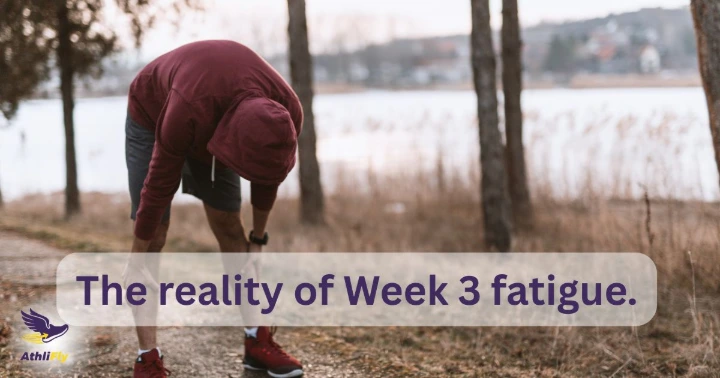
I started Couch to 5K three weeks ago. I followed the plan. I showed up. I did the intervals. And somewhere around Day 2 of Week 3, I stood in the middle of a park path, bent at the waist, hands on knees, making sounds that concerned a nearby dog walker.
The app said I was "smashing it."
My shins disagreed. Loudly.
So I did what any reasonable person does at 7 AM when their body is staging a revolt: I Googled "why does Couch to 5K hurt so much" and ended up in a rabbit hole of contradictory advice, sponsored shoe reviews, and approximately 40 forum threads from 2011.
That's the gap AthliFly exists to fill. Not hype. Not toxic positivity. Just the biomechanics of why your body hurts and what to actually do about it.
Why Does Couch to 5K Hurt So Many Beginners in the First Place?
FLY: Strip away the app branding and Couch to 5K is a simple idea: alternate walking and jogging, shift the ratio gradually over 8–10 weeks, and let your body adapt to running stress without shocking it all at once.
The idea is sound. The execution is where things fall apart.
When researchers tracked real C25K participants — not idealized app users, but actual people starting from the couch — they found that up to 49% reported some form of musculoskeletal pain or injury during the nine-week program. The highest-risk group looked exactly like the AthliFly reader: previously inactive adults, often carrying extra weight, no strength base, three impact sessions a week starting from zero.
Perry & Burnfield's gait analysis work explains the mechanics: running is not just "fast walking." During a brief flight phase, both feet leave the ground, and peak vertical forces of 2–3.6 times body weight crash back down at initial contact. Your bones, tendons, and cartilage need weeks to adapt to that. Your lungs adapt faster. Your ego adapts fastest of all — and that mismatch is where most beginners get hurt.
The three-part failure pattern is almost always the same:
Running faster than the plan intends (the "ego pace" trap)
Skipping walk breaks because walking feels like "not really training"
Wearing old casual sneakers instead of shoes that control how the foot loads
REX: Great. So I was doing all three. Simultaneously. While congratulating myself.
FLY: Yes. That's actually the most common way to do it.
The AthliFly Week-by-Week Modified C25K Schedule
FLY: Here's the joint-friendly version. Three sessions per week. At least one full rest day between run days. Add a 5-minute brisk warm-up walk and 5-minute cool-down walk to every session — those are assumed but not listed in the table.
The goal isn't to "crush" Week 1. The goal is to still be running in Week 10 with intact knees.
WEEK 1
🏃 Run: 30 sec easy jog × 8
🚶 Walk: 90 sec
🎯 Focus: Zone 2 Talk Test — relaxed arms, zero heroics, fully conversational pace
WEEK 2
🏃 Run: 45 sec easy jog × 8
🚶 Walk: 75 sec
🎯 Focus: Soft landings, quiet feet — notice your natural cadence but don't change it yet
WEEK 3
🏃 Run: 60 sec jog × 8
🚶 Walk: 60 sec
🎯 Focus: First cadence check — nudge one interval ~5% quicker, stay fully conversational
WEEK 4
🏃 Run: 90 sec jog × 6
🚶 Walk: 90 sec
🎯 Focus: Shorter strides landing under the hips, slight forward lean from the ankles
WEEK 5
🏃 Run: 2 min jog × 5
🚶 Walk: 2 min
🎯 Focus: Apply +5% cadence on two intervals — monitor for any knee "pulling" sensation
WEEK 6
🏃 Run: 3 min jog × 4
🚶 Walk: 2 min
🎯 Focus: Maintain Zone 2 breathing throughout — no gasping, no speed-chasing
WEEK 7
🏃 Run: 5 min jog × 3
🚶 Walk: 3 min
🎯 Focus: Lock in the new cadence — focus on soft knee flexion at each landing
WEEK 8
🏃 Run: 8 min jog × 2
🚶 Walk: 3 min
🎯 Focus: Cruise pace — full sentences, no burning shins, no stabbing knees
WEEK 9
🏃 Run: 10–12 min jog × 2
🚶 Walk: 2–3 min
🎯 Focus: Connect two longer blocks — seriously consider repeating this week before Week 10
WEEK 10 🏅 Graduation
🏃 Run: 20–30 min continuous
🚶 Walk: Only if Talk Test fails
🎯 Focus: Dial the ego back, keep the knees intact — not the other way around
REX: So I get ten weeks, permission to repeat any of them, and the official coaching advice is "don't be a hero."
FLY: Correct. Heroes are great for movie posters. For cartilage, boring consistency wins every single time.
⚠️ Rex's Warning — Week 3 Trap
Week 3 is statistically where most beginners either quit or get hurt. The intervals jump from 45 seconds to 60 seconds and suddenly feel twice as hard. That's not weakness — that's your aerobic base not yet matching your ambition. If Week 3 Day 2 breaks you, see our guide How to Repeat a C25K Week Without Feeling Like a Failure before you delete the app.
Why Are You Gasping for Air by Minute Two? (The Ego Pace Problem)
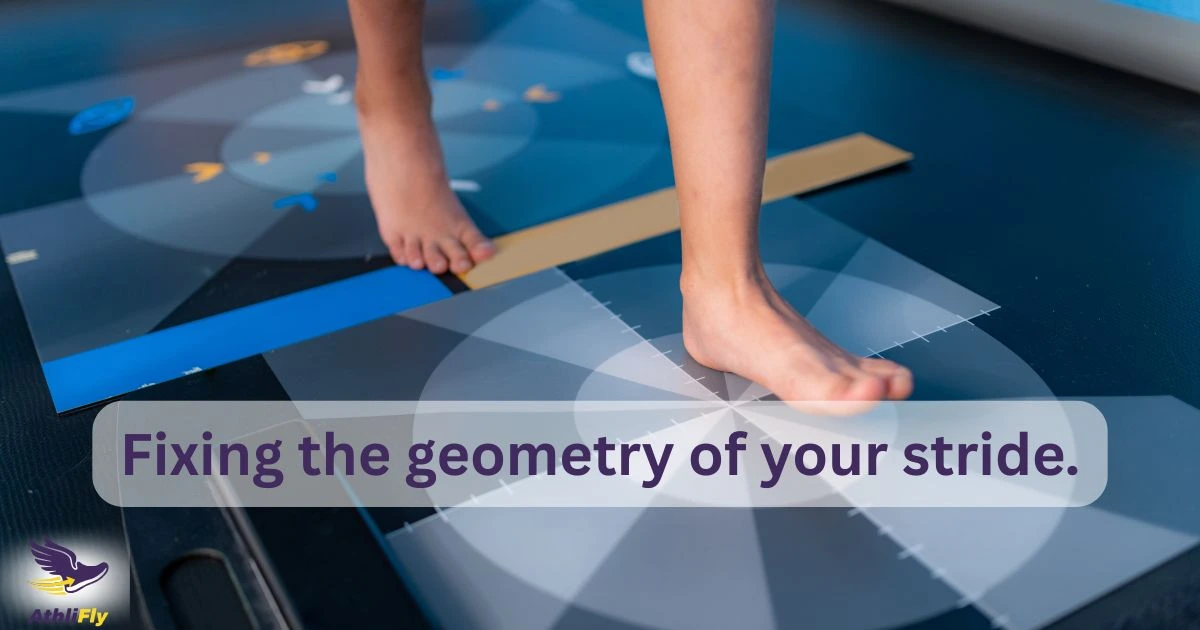
REX: Can we talk about the breathing thing? Because I look like a perfectly normal human until about 90 seconds in, and then I transform into a dial-up modem trying to connect over a bad phone line.
I'm not sprinting. I'm barely faster than a power-walk. And yet somehow my lungs are filing for bankruptcy.
FLY: You've crossed your anaerobic threshold. And it happens faster than most beginners expect.
When you start too fast, your body shifts from burning fat aerobically to burning glycogen anaerobically. Lactate accumulates faster than your current mitochondrial machinery can clear it. The result is that tight-chest, heavy-leg, "I'm dying at minute two" sensation described in exercise physiology research indexed on PubMed and explained in detail in Owen Anderson's Running Science.
The fix is one of the most counterintuitive things in beginner running: you slow down before your body forces you to.
The Talk Test is your field tool:
Full sentences without pausing → Zone 2, you're in the right range
Two-word gasps → you've crossed into anaerobic territory
Comfortable enough to deliver a TED Talk → you're walking, speed up slightly
Zone 2 — roughly 60–70% of your max heart rate — is where mitochondrial density and capillary networks are built. That's the factory you're constructing in Weeks 1 through 6. You can't build it faster by going harder. You build it by staying in the zone consistently.
REX: So the entire secret is to slow down to the point where I feel slightly embarrassed about my pace?
FLY: That's exactly the secret. The runners passing you are either very fit or they'll be injured by Week 5. You're playing a different game.
🔑 Not sure if your shoes are slowing your Zone 2 down?
Arch collapse wastes energy on every stride. Don't guess your arch type.
→ Take the Shoe Finder Quiz — 60 seconds, zero sales pressure.
Why Do Your Shins and Knees Hurt? (It's Your Geometry, Not Your Weakness)
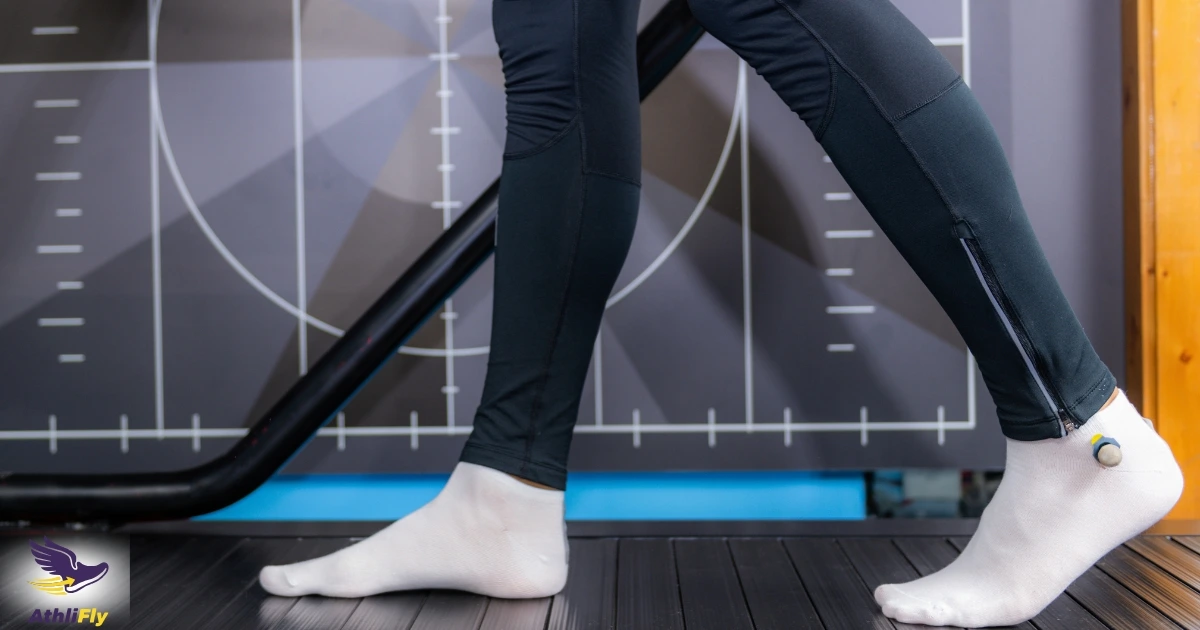
FLY: Here's the biomechanics that most Couch to 5K guides skip entirely.
Perry & Burnfield show that during running, the quadriceps fire eccentrically to control approximately 38 degrees of knee flexion at every stance phase — more than double the 18 degrees used during walking. At the same time, peak vertical forces hit 2–3.6 times body weight. That's a big, repeated load through the patellofemoral joint with every single step.
Now add the most common beginner error: overstriding — landing with the foot well in front of your center of mass. This increases the braking force up the chain from ankle to knee to hip. It's the mechanical origin of most "Runner's Knee" in beginners, and it has nothing to do with weakness. It's a geometry problem.
The fix is a small cadence increase: nudge your steps per minute up by 5–10%. Studies in Gait & Posture and Journal of Orthopaedic & Sports Physical Therapy show that a 10% cadence increase reduces patellofemoral joint stress by approximately 14–21% without changing your speed. Shorter, quicker steps bring your foot under your hips, cut the braking spike, and take stress off your knees.
Practical protocol for this schedule:
Weeks 1–2: Notice your natural cadence on one interval. No changes yet.
Weeks 3–4: Nudge one interval 5% quicker and hold conversational pace.
Weeks 5–6: Extend the new cadence to two or three intervals per session.
Never chase 180 SPM. That's an elite average, not a beginner target.
REX: So the two-word version of all this is: "shorter steps."
FLY: The two-word version is: "shorter steps." The ten-page version involves cadence studies and Perry & Burnfield. You got both.
⚠️ Rex's Warning — The Shin Pain Signal
Mild shin awareness in Week 1 is normal. Sharp, localized shin pain that gets worse with each run is not. That pattern — medial tibial stress syndrome — has a clean paper trail in The American Journal of Sports Medicine and it escalates into stress fractures if you ignore it. If your shins are worsening, slow down, check your cadence, and check your shoes before you push through.
Oxygen and Gear: The Two Things Nobody Tells You About
REX: Can we talk about the stabbing knife in my ribs? Because nobody in the app onboarding mentioned that either.
Week 3, Minute 3. Sudden stabbing pain under the ribs, lungs on fire, mild existential crisis. I am bent at the waist doing the half-bend thing you see in stock photos and wondering if I'm having a cardiac event or just a bad run.
So I assume:
My lungs are broken.
My diaphragm has filed a formal complaint.
Running was invented by people who enjoy suffering.
FLY: That's a side stitch. Clinically: exercise-related transient abdominal pain (ETAP).
It's caused by shallow upper-chest breathing and a mismatch between your foot-strike rhythm and diaphragm movement. Research indexed on PubMed traces it to exactly that mechanical disconnect — not a structural failure, not a fitness problem. A breathing problem.
Three fixes:
Breathe low, not high. Expand your belly and lower ribs instead of lifting your shoulders. Diaphragmatic breathing reduces tension on the connective structures between the diaphragm and abdominal wall — the exact tissue implicated in ETAP by reviews in the Journal of Strength and Conditioning Research.
Pick a rhythm and lock it in. Many distance runners use a 3:2 pattern (three steps inhale, two exhale) or 2:2. The specific pattern matters less than the consistency — tying breath to stride smooths out the pressure spikes.
Exhale toward the stitch. If the pain is on your right, time a strong exhale as your left foot strikes. This reduces the downward drag of abdominal contents on the irritated side.
Our guide How to Breathe Properly While Running converts these into simple drills you can layer over early C25K intervals from Day 1.
REX: Great. Now what about the shoes?
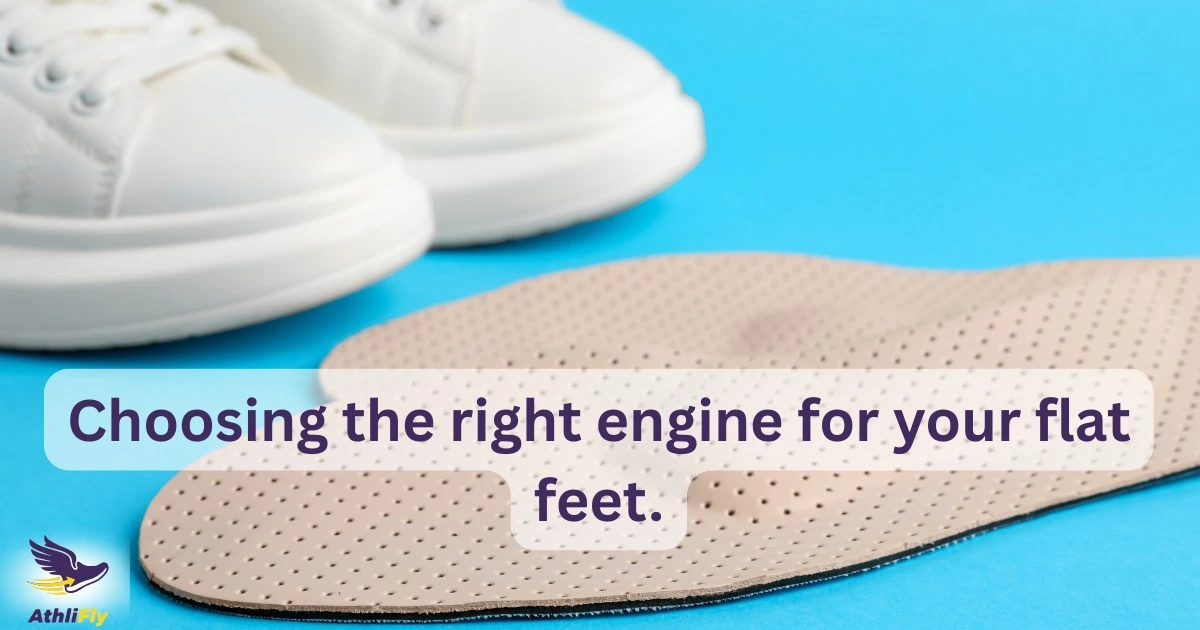
Just when the breathing stops feeling like waterboarding, my arches collapse inward like a camping chair in the rain and my knees start filing new complaints. I keep seeing words like "overpronation" and "motion control" and every shoe wall looks like a tech startup naming contest.
I have flat feet. I have a normal salary. I do not want to accidentally buy the wrong spaceship for my ankles.
FLY: Foot mechanics first. Price tag second.
Perry & Burnfield's data show that peak pressure during running occurs under the first three metatarsal heads at mid-stance — not at heel strike — when vertical forces are highest. If your subtalar joint collapses inward under that load, your tibia and femur rotate more than they should. That increases patellofemoral joint stress and tibial bending loads — the mechanical pattern behind Runner's Knee and shin splints, documented in Clinical Biomechanics and Gait & Posture.
For flat-footed beginners, a Couch to 5K shoe passes three checks:
Effective heel rocker — a beveled, cushioned heel that smooths initial contact and limits abrupt loading spikes
Medial support where you collapse most — dual-density foam, a wider base, or sidewalls that resist inward roll without immobilizing the joint
Forefoot rocker for easy toe-off — a gently curved forefoot that lets you roll forward instead of levering through stiff joints
Based on spec-sheet evaluation and 300+ verified reviews per model, our guide Best Shoes for Couch to 5K (Flat Feet Edition) filters every recommendation through these three checkpoints before Rex ever looks at a price.
Your foot mechanics decide the category. Your budget decides the brand.
✅ Rex Verdict
*"Alright. Slow down, shorter steps, breathe from my belly, and don't let my arches behave like wet cardboard. And if I'm still confused about what shoe to buy — take the quiz instead of spending 40 minutes on Reddit getting worse advice for free."*
→ Take the 60-second Shoe Finder Quiz — get a biomechanics-matched recommendation, not a sponsored list.
Frequently Asked Questions About Couch to 5K
Can I do Couch to 5K every day?
REX: My brain says yes. My shins have hired legal representation.
FLY: Sudden frequency spikes are one of the most consistently identified risk factors for overuse injuries in new runners. Bones, tendons, and cartilage need at least 24–48 hours to remodel after impact sessions — and that window extends for higher-BMI or long-detrained runners.
Three run days per week with rest or walk-only days in between is the evidence-based sweet spot. Light walking, hip mobility work, and basic calf strengthening on off days supports adaptation without stacking more ground-contact stress.
If you want honest timelines rather than the nine-week marketing promise, How Long Does Couch to 5K Take in Real Life? breaks down what real people's progressions actually look like — including sick weeks, repeat weeks, and life interruptions.
Is it normal for shins to hurt during Couch to 5K?
REX: My tibias feel like someone replaced them with hot metal rods. Baseline question: is this normal?
FLY: Mild, short-lived shin awareness in Week 1 is common. Sharp, worsening shin pain that lingers after your run is a warning signal.
The tibialis anterior — the muscle on the front of your shin — operates above 20% of its maximal capacity for more than 85% of the running cycle, according to Perry & Burnfield. Sudden volume increases fatigue that muscle, alter foot strike, and increase tibial stress — the documented pathway to shin splints and stress fractures in studies on PubMed and in The American Journal of Sports Medicine.
Three practical fixes: slow into Zone 2, nudge cadence up 5–10%, and check your footwear against your foot type. If pain is sharp, localized, or worsening, pause the program and get it assessed. See also What to Do When Couch to 5K Feels Too Hard for a full pace-adjustment protocol.
What should I do if I miss a week of Couch to 5K?
REX: This is my specialty. I miss a week, feel guilty for two, then jump back in at the same level and nearly die.
FLY: Jumping back in at the same level is the worst option from a tissue-adaptation standpoint. Even short breaks reduce tendon stiffness and muscle enzyme activity — the same workload becomes a higher relative stress.
AthliFly protocol:
Missed up to 7 days → repeat the last completed week
Missed 8–14 days → drop back one full week and treat it as a rebuild block
Missed more than 14 days → restart two to three weeks earlier, especially in later high-impact stages
Most beginners don't quit because the plan failed. They quit because perfectionism turned one missed week into an identity crisis. How to Repeat a C25K Week Without Feeling Like a Failure exists specifically for that spiral — with a decision matrix and a mindset reset that makes "repeating Week 4" feel like a tactical move, not a confession.
Rex & Fly — Final Word
REX: So let me recap the actual plan:
Run slower than my ego wants
Take more walk breaks than the app considers impressive
Breathe from my belly, not my throat
Wear shoes matched to my flat feet, not my aesthetic preferences
Repeat weeks without shame when my body sends the memo
That's… a manageable list.
FLY: That's always been the list.
You don't need a heroic pain tolerance. You need a boring commitment to the right pace, the right form cues, and the right footwear — applied consistently over 10–14 weeks, not nine.
One last thought before you lace up:
"The impediment to action advances action. What stands in the way becomes the way."
— Marcus Aurelius, Meditations
Your missed weeks, side stitches, and cranky knees aren't proof that you don't belong in running shoes. They're the data points we use to build a smarter plan.
We'll see you on the path — in the breathing guide How to Breathe Properly While Running, the shoe breakdown in Best Shoes for Couch to 5K (Flat Feet Edition), and the full timeline reality check in How Long Does Couch to 5K Take in Real Life?
Rex keeps complaining. You keep showing up. That's the whole deal.
Scientific Sources & Biomechanics Data
Running Mechanics & Joint Load: Gait Analysis: Normal and Pathological Function (2nd Edition) by Perry & Burnfield.
Cadence Optimization & Knee Stress: The effect of cadence on patellofemoral joint stress — Published in the Journal of Orthopaedic & Sports Physical Therapy (JOSPT).
Breathing Protocol & Side Stitches: Exercise-related transient abdominal pain (ETAP) by D.P. Morton — Indexed in PubMed.
Shin Splints & Tissue Adaptation: Medial Tibial Stress Syndrome: A Review — The American Journal of Sports Medicine.
Aerobic Base & Pacing: Running Science by Owen Anderson.
Disclaimer: This guide is for educational purposes based on biomechanical research. If you experience sharp, worsening pain, please consult a physical therapist.
Affiliate Disclosure: AthliFly uses affiliate links. If you buy through our links, we may earn a small commission at no extra cost to you. Our editorial decisions are based on biomechanics research and verified reviews — never commission rates.