
📥 Prefer a paper tracker? You can download the official [AthliFly 8-Week 5K Training Workbook (PDF)] to print your plan, log workouts, and track your XP points by hand.
Rex: I Wanted to Run 5K. My Lungs Wanted a Formal Meeting.
The registration page made a 5K sound harmless.
Five kilometers. A number. A finish line. Maybe a small medal. Possibly a suspiciously cheerful race T-shirt.
I signed up wearing an old pair of Brooks Ghosts, a faded gray T-shirt, and the confidence of a man who had not yet attempted the distance. Four minutes into my first training session, my lungs were negotiating with the legal department. My calves felt overqualified for the job. My knees had already begun drafting a complaint.
I walked home and told everyone the session went well. It was 6:40 in the morning. Nobody needed that level of honesty before coffee.
Then I made the classic mistake.
I ran faster.
I skipped the walk breaks, treated every easy session like a secret race, and assumed soreness meant the plan was working. Three weeks later, I had less fitness, more pain, and a growing suspicion that the 5K had been invented specifically to expose people who confuse enthusiasm with preparation.
What Makes an 8-Week 5K Plan Work?

Fly: Your Lungs Improve Before Your Tissues Are Ready
A beginner 5K plan has to develop more than cardiovascular fitness.
Your heart and breathing may respond to training within days or weeks. Tendons, bones, fascia, and the muscles that stabilize your joints work on a slower timetable. Perry and Burnfield’s gait research helps explain why: running removes walking’s double-support phase and replaces it with repeated single-leg landings, a short flight phase, and higher ground reaction forces during stance.
That creates a gap between load and capacity. Your breathing may feel better while your tibia, Achilles tendon, plantar fascia, and knee tissues are still adapting to repeated impact.
Owen Anderson makes a related point in Running Science: running economy improves through repetition, coordination, and gradual tissue adaptation. A beginner does not need to run harder every session. The body needs enough controlled exposure to learn the movement without being overwhelmed by it.
That is why this plan uses:
- Three running sessions per week.
- Run/walk intervals.
- At least one recovery day between running sessions.
- Conversational Zone 2 effort.
- Gradual progression.
- Two short strength sessions each week.
- Permission to repeat a week.
Who Should Use This Plan?
This 8-week 5K training plan suits beginners who:
- Can walk comfortably for 30 minutes.
- Have little or no recent running history.
- Want to complete a 5K rather than chase an immediate personal record.
- Prefer a structured running schedule for beginners.
- Like the idea of run/walk intervals more than nonstop suffering.
- Are willing to repeat a week when their body needs more time.
If you have sharp pain, pain at rest, significant swelling, unexplained shortness of breath, or a medical condition that affects exercise safety, seek appropriate medical guidance before starting.
The Plan at a Glance
How Hard Should You Run?
Rex: My Easy Pace Was Apparently a Secret Time Trial
The plan said easy jogging.
I interpreted that as the fastest pace I could hold while remaining technically upright. My breathing disagreed. My face disagreed. A dog behind a garden wall looked unconvinced.
When beginners run too fast, they cross above their current aerobic threshold early in the session. Breathing becomes ragged, fatigue arrives quickly, and each running interval turns into a small emergency meeting.
Fly: Use the Talk Test

Use this simple field guide:
- Full sentences: Your effort is probably controlled.
- Short fragments: Slow down.
- No speech at all: Walk until breathing settles.
This gives you a useful pacing measure without requiring a laboratory or a perfect heart-rate estimate.
The first weeks are for base building. You are teaching the heart, lungs, muscles, and nervous system to cooperate at a sustainable effort. Speed work can wait.
The Complete 8-Week 5K Training Plan
Want to keep this plan on your desk or fridge? [Download the Print-Ready 8-Week 5K Workbook (PDF)] to log your progress and check off weekly milestones.
Week 1: Learn the Run/Walk Rhythm
Three sessions
- Warm-up: 5 minutes of brisk walking.
- Run: 30 seconds of easy jogging.
- Walk: 90 seconds.
- Repeat 8 times.
- Cool-down: 5 minutes of easy walking.
Focus: Stay conversational. Let the running feel almost too easy.
Rex: If you finish Week 1 thinking, “That was barely running,” your ego may be annoyed. Fine. Your ego does not need recovery between sessions.
Fly: Short run/walk intervals limit continuous impact while still exposing the cardiovascular system and lower-limb tissues to running-specific loading.
Week 2: Add a Little More Running
Three sessions
- Warm-up: 5 minutes of brisk walking.
- Run: 45 seconds of easy jogging.
- Walk: 75 seconds.
- Repeat 8 times.
- Cool-down: 5 minutes.
Focus: Relax your shoulders and avoid reaching forward with your feet.
Beginners often speed up because the intervals remain short. Resist that temptation. The useful workout is the one you can recover from and repeat.
Week 3: Build Control During Longer Intervals
Three sessions
- Warm-up: 5 minutes.
- Run: 60 seconds.
- Walk: 60 seconds.
- Repeat 8 times.
- Cool-down: 5 minutes.
Focus: Notice your natural cadence without forcing a new number.
This is often the first week that feels substantially different. The running intervals are longer, and the recovery walks are shorter. If breathing becomes uncontrolled, reduce the pace before changing the entire workout.
Week 4: Develop a More Stable Stride
Three sessions
- Warm-up: 5 minutes.
- Run: 90 seconds.
- Walk: 90 seconds.
- Repeat 6 times.
- Cool-down: 5 minutes.
Focus: Let your foot land closer to your body. Avoid overstriding.
Overstriding increases braking forces because the foot lands too far ahead of the center of mass. A shorter, quieter step may feel less impressive, but it usually produces a calmer landing.
Week 5: Extend the Running Blocks
Three sessions
- Warm-up: 5 minutes.
- Run: 2 minutes.
- Walk: 2 minutes.
- Repeat 5 times.
- Cool-down: 5 minutes.
Focus: Stay within a conversational effort zone.
Rex: Two minutes sounded completely reasonable until I had to repeat it five times. Then it became an administrative crisis involving my lungs.
Fly: The walking interval should restore enough breathing control for the next running block to remain technically manageable. Recovery is part of the session.
Week 6: Practice Sustained Easy Running
Three sessions
- Warm-up: 5 minutes.
- Run: 3 minutes.
- Walk: 2 minutes.
- Repeat 4 times.
- Cool-down: 5 minutes.
Focus: Maintain relaxed breathing and a consistent stride length.
Do not treat the walk break as failure. It lets you accumulate running time without forcing fatigue to distort your mechanics.
If Week 6 Feels Too Hard
Rex: Someone quietly increased gravity.
Fly: Adjust the plan instead of obeying it mechanically:
- Slow down the running pace.
- Extend the walking interval.
- Reduce the number of repetitions.
- Repeat Week 6.
- Replace one run with brisk walking if exhaustion continues.
- Review sleep, stress, heat, and footwear.
A training plan should respond to your body. It should not demand that your body pretend to be someone else’s.
Week 7: Hold Form as Intervals Lengthen
Three sessions
- Warm-up: 5 minutes.
- Run: 5 minutes.
- Walk: 3 minutes.
- Repeat 3 times.
- Cool-down: 5 minutes.
Focus: Watch for fatigue-related changes.
Ask yourself:
- Are your shoulders rising?
- Are your feet reaching farther forward?
- Is your cadence slowing?
- Are your knees drifting inward?
- Can you still speak in short sentences?
Perry and Burnfield’s gait work helps explain why this matters: fatigue can change joint control and stride consistency even when the distance stays the same. If your form collapses early, repeat the week rather than progressing automatically.
Week 8: Complete Your First 5K
Option A: Continuous effort
- Warm-up: 5–10 minutes of walking.
- Run continuously for 20–30 minutes at an easy pace.
- Add short walk breaks if the Talk Test fails.
- Cool down with 5 minutes of walking.
Option B: Run/walk completion
- Run 5 minutes.
- Walk 1–2 minutes.
- Repeat until you complete 5K.
The finish line does not care whether you walked. Your joints may appreciate the honesty.
Strength Training for a Beginner 5K
Running alone does not always build enough strength to maintain form under fatigue. Two short strength sessions per week can support your hips, calves, feet, and trunk without turning your schedule into a second job.
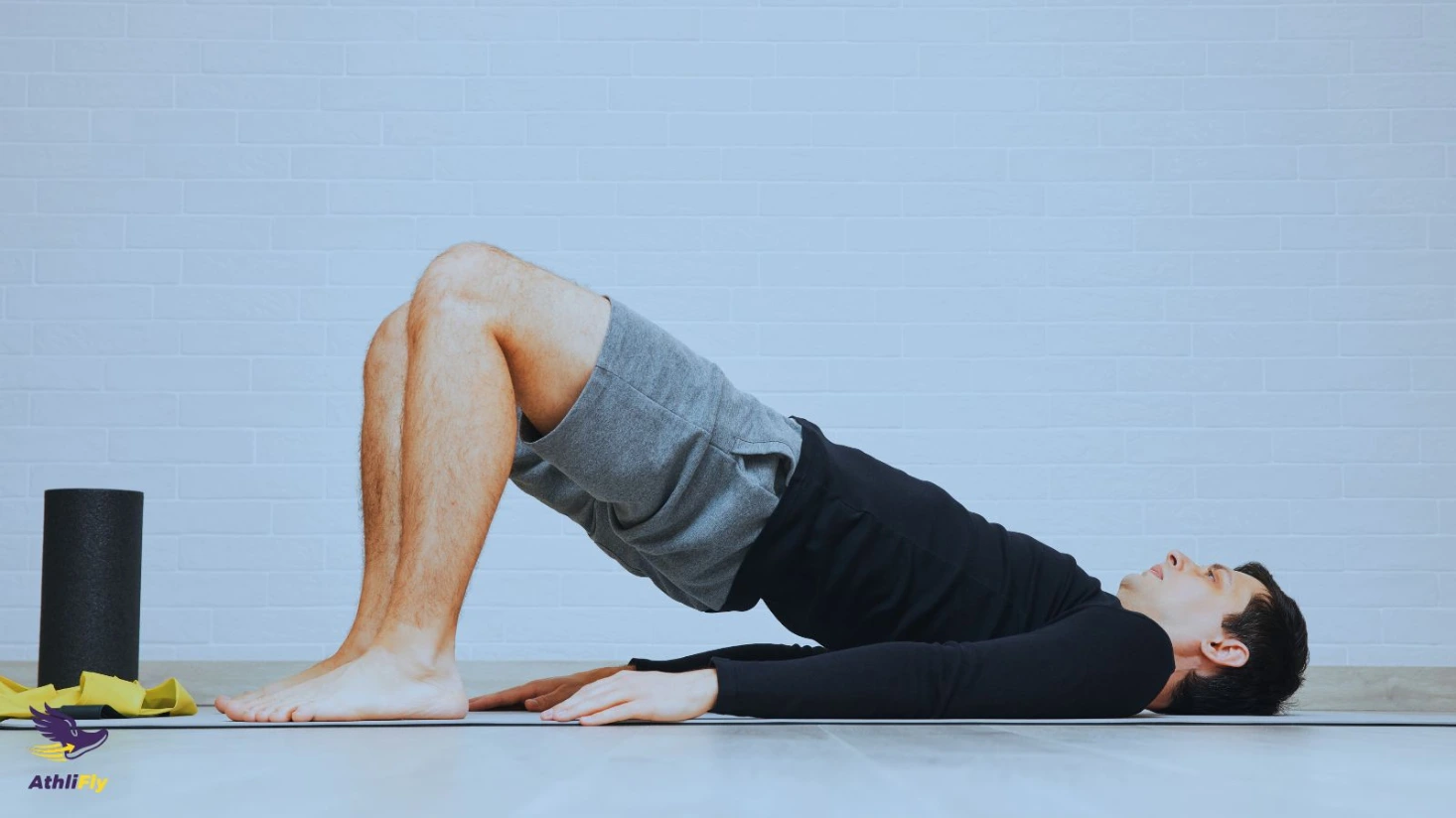
Keep the sessions controlled. You are building support for the running plan, not creating a new form of exhaustion.
How to Know When to Repeat a Week
Repeat the current week if:
- You cannot complete the running intervals at an easy effort.
- Breathing remains uncontrolled for most of the session.
- Pain becomes sharper or more localized as the run continues.
- Your gait changes to protect one side.
- Symptoms are clearly worse the next morning.
- The current week feels harder rather than easier.
Repeating a week is a training decision, not a character assessment. Bone, tendon, fascia, and joint tissues respond to load, recovery, and time — not to the number printed beside a workout.
Beginner 5K Training Questions
Can I Train for a 5K Every Day?
Rex: My motivation says yes. My shins have hired a lawyer.
Fly: Most beginners should not run every day. Three running sessions per week with rest or low-impact days between them gives tissues time to adapt. Walking, gentle cycling, mobility work, and strength training can support fitness without adding the same repeated impact as running.
What If I Cannot Complete Week 1?
Rex: I failed the easiest week. Even my couch is disappointed.
Fly: Reduce the running interval, lengthen the walking interval, or begin with brisk walking for several sessions. The plan should match your current capacity rather than punish you for having a starting point.
How Fast Should I Run During a Beginner 5K Plan?
Use a pace that allows you to speak in full sentences during most running intervals. It may feel slower than expected, but easy running supports aerobic base building, limits premature fatigue, and gives you more control over landing mechanics.
Can I Run a 5K If I Am Overweight or Completely Out of Shape?
Yes, but the progression may need to be slower. Higher body mass increases the mechanical demand at each ground contact, so longer walking intervals, repeated weeks, and strength work may be especially useful.
The goal is not to prove that your body can tolerate the most aggressive plan. The goal is to build a running habit that lasts.
Should I Use a Running App?
An app can help with timing and consistency, but it cannot feel your shin, interpret your gait, or decide whether your next session should be repeated. Use it as a timer and record, not as a substitute for body awareness.
What Should I Do If I Miss a Week?
Return to the last week you completed comfortably. If the break lasted longer than two weeks, drop back further and rebuild gradually. Trying to resume at the exact point where you stopped is a reliable way to turn a short interruption into a new injury.
How to Prepare for Your First 5K Event
Rex: I can now run for several minutes without seeing my ancestors. Naturally, I have decided the next step is to panic about race day.
What if everyone passes me? What if I start too fast? What if I need to walk? What if the finish line is moved farther away while I am not looking?
Fly: Race preparation is mostly about practicing the controlled effort you have already built and removing unnecessary surprises.
Your first 5K is not a test of who can suffer the most. It is a test of whether you can distribute your effort across the distance without spending everything during the opening kilometer.
The Final Two Weeks Before Race Day
A taper does not need to be dramatic for a beginner. It simply means reducing fatigue while preserving familiarity.
How to Pace Your First 5K
Rex: My Natural Race Strategy Is to Sprint the First 400 Meters and Negotiate With Reality Later
The starting signal goes off, everyone moves, and suddenly my easy pace feels embarrassing. I speed up to avoid looking slow. Four minutes later I am breathing like a broken accordion and wondering whether the finish line can be legally relocated closer to me.
Fly: The Opening Kilometer Should Feel Almost Too Controlled
Leave something available for the final third:
- Kilometer 1: Start slower than your excitement suggests.
- Kilometer 2: Settle into a sustainable conversational-to-controlled effort.
- Kilometer 3: Maintain rhythm rather than chasing other runners.
- Kilometer 4: Reassess breathing, legs, and joint comfort.
- Final kilometer: Increase effort only if you can do so without losing form.
- Final 400–500 meters: Finish more strongly if you still have control.
Even pacing prevents an early anaerobic surge from producing excessive fatigue before your tissues and cardiovascular system are ready.
Run-Walk Strategies for Race Day
Walking during a 5K is a pacing tool.
Planned Short Walk Breaks
- Run for 5 minutes.
- Walk for 1 minute.
- Repeat throughout the race.
Effort-Based Walk Breaks
- Run while breathing remains controlled.
- Walk before your breathing becomes desperate.
- Resume running once you can speak in short sentences.
Hill-Based Walk Breaks
- Run the flat sections.
- Walk steep climbs.
- Resume an easy run at the top.
Use the strategy you practiced. Race day is a poor time to invent a new run/walk ratio because a stranger in a bright shirt passed you.
Warm-Up and Cool-Down
A Beginner-Friendly Warm-Up
Start 10–15 minutes before the race:
- Walk briskly for 5–8 minutes.
- Perform gentle ankle circles.
- Add 8–10 controlled calf raises.
- Perform a few relaxed marching steps.
- Jog lightly for one or two minutes if comfortable.
The warm-up should raise body temperature without creating fatigue.
Cool-Down After the 5K
After finishing:
- Walk for 5–10 minutes.
- Drink according to thirst.
- Change out of wet clothing.
- Eat a normal meal or snack when practical.
- Avoid aggressive stretching on cold, irritated tissues.
Gentle walking helps you transition gradually from repeated running effort to rest.
Common Beginner Mistakes Before and During a 5K
Rex: So the official race-day strategy is not to become a different person in a numbered bib.
Fly: Correct. You are expressing the fitness you built, not creating a new athlete during the starting countdown.
What to Eat and Drink Before a Beginner 5K
You do not need an advanced race-fueling system for a first 5K.
Before the Race
Choose familiar, easy-to-digest food:
- Toast with a small amount of peanut butter.
- A banana.
- Oatmeal.
- Yogurt if you tolerate dairy.
- A small cereal portion.
- Water according to thirst.
Avoid unfamiliar supplements, large meals, and excessive fluid intake. A nervous stomach does not become more cooperative because you gave it three energy gels before a short race.
During the Race
Most beginners do not need fuel during a 5K. Water may be useful in hot conditions, but drink according to thirst rather than forcing large amounts at every station.
After the Race
A normal meal containing carbohydrates and protein can support recovery. You do not need a dramatic recovery shake unless it is convenient and agrees with your stomach.
Strength and Recovery During Race Week
Continue strength work, but reduce the amount slightly during the final week. Avoid taking any set to exhaustion.
Focus on:
- Glute bridges.
- Side-lying leg raises.
- Calf raises.
- Bent-knee soleus raises.
- Step-downs.
- Side planks.
Recovery also includes:
- Adequate sleep.
- Easy walking on rest days.
- Normal meals.
- Light mobility.
- Honest monitoring of pain.
Muscles may feel tired after a new session. Sharp, localized pain that changes your gait belongs to a different category.
How to Know If You Are Ready for Race Day
You do not need to run the full 5K continuously in training.
Useful readiness signs include:
- You can complete 20–30 minutes of easy running or run/walk work.
- Your joints tolerate three weekly sessions without worsening symptoms.
- You recover between sessions.
- Your breathing is manageable at an easy pace.
- You have practiced your shoes, clothing, and fueling routine.
- You can use walk breaks without feeling the plan has failed.
Race-Day Questions
Can I Complete a 5K With Walk Breaks?
Rex: Please say yes before I start pretending walking is a moral failure.
Fly: Yes. Run/walk intervals are a legitimate endurance strategy. They help manage breathing, reduce accumulated fatigue, and give beginners more control over impact. Many runners use them intentionally even after completing their first 5K.
Should I Run the Full 5K Before Race Day?
Not necessarily. Completing the full distance can build confidence, but it is not mandatory. Progressive run/walk intervals can prepare you to complete the distance with a controlled strategy.
What If I Miss the Final Week of Training?
Return to your last comfortable week. Do not compensate with extra mileage. A short break does not erase your progress, but rushing back can create unnecessary fatigue or pain.
Should I Run the Day Before the Race?
A short, easy jog may help some runners feel relaxed, but it is not required. If you are tired, rest or walk gently. Arrive fresh.
Can I Run Another 5K Immediately After My First One?
Give your body time to recover, especially if the event was harder than your training sessions. A few easy days of walking and light movement can help you assess whether your muscles and joints are ready for another structured run.
What Should I Do If Pain Appears During the Race?
Sharp, localized, or worsening pain should not be ignored. Slow to a walk, assess whether your gait has changed, and stop if the pain persists or worsens. Continuing through a warning signal can turn a manageable issue into a longer interruption.
After Your First 5K
Rex: I finished. I did not break any official records, unless there is a record for looking confused near the water station.
Fly: Completion Is the First Useful Data Point
After the race, consider:
- How did your pacing feel?
- Did you start too quickly?
- Which run/walk strategy worked?
- Where did fatigue appear?
- Did any pain occur during or after the race?
- How did your shoes perform?
- What would you change next time?
Avoid judging the entire experience by the final time. Your first 5K teaches you how your body responds to distance, effort, weather, nerves, and race-day conditions.
What Comes After Your First 5K?
Option 1: Build Consistency
Continue running three times per week with a mixture of easy running and run/walk intervals. This is the best choice if your main goal is a durable habit.
Option 2: Improve Your 5K Time
Keep most training easy and add one carefully controlled quality session later. Speed work should come after consistency, not before it.
Option 3: Move Toward a 10K
Increase the duration of one weekly session gradually while keeping the other runs easy. Do not increase distance, speed, and frequency at the same time.
Option 4: Take a Short Recovery Block
If the 5K exposed soreness, fatigue, or repeated pain, take several easy days and review your training before progressing. A recovery week is how the body absorbs the work.
Rex & Fly: Final Word
Rex: So the plan was never “run hard until the finish line and hope the knees respect the effort.”
Fly: It was gradual running, controlled pacing, rest days, strength work, and enough humility to repeat a week when your tissues needed more time.
Rex: And walking?
Fly: Still legal.
Rex: Excellent. I may continue this sport after all.
Your first 5K does not require perfect form, elite fitness, or a heroic relationship with discomfort. It requires a manageable progression that allows your cardiovascular system and connective tissues to adapt together.
Start slower than your ego wants. Keep the early pace conversational. Use walk breaks before you need them. Then let consistency do the work.
💬 Over to You: What Will Your First 5K Look Like?
Rex: Are you training for your first 5K, or are you still negotiating with the idea of leaving the couch? What worries you most — the distance, the breathing, the crowd, or the suspiciously cheerful race-day music?
Fly: If you are unsure how to adjust the plan for your current fitness, bodyweight, schedule, or pain history, describe your starting point and the last session you completed comfortably.
What to Do Next
- Choose three weekly training days and place at least one recovery day between them.
- Write down your Week 1 run/walk ratio before your next session.
- Track effort, symptoms, and next-morning recovery instead of judging progress only by pace.
Prefer the full detailed breakdown with pacing strategy and race-week nutrition? Read the complete 5K Training Plan guide.